
Yokai Monsters: Spook Warfare (1968)
aka Yôkai daisensô (Big Monster War)
Directed by Yoshiyuki Kuroda
Written by Tetsurô Yoshida
Starring Yoshihiko Aoyama, Hideki Hanamura, Chikara Hashimoto, Hiromi Inoue, Akane Kawasaki, and Gen Kuroki

Yôkai is one of the Japanese terms for monsters, particularly ghosts or apparitions. Some were drawn from genuine folklore, but many sprang from the imagination of artists. Whatever their origins they’re the inspiration for a lot of modern Japanese entertainment, particularly comics and animation. The best-known designs for some of them are based on the suits created for Yokai Monsters: Spook Warfare.
X-Game (2010)
Directed by Yôhei Fukuda
Written by Mari Asato and Yôichi Minamikawa based on the novel X gêmu by Yûsuke Yamaha
Starring Kazuyuki Aijima, Hirofumi Araki, Shôta Chiyo, Meguru Katô, and Ayaka Kikuchi

(X GAME)
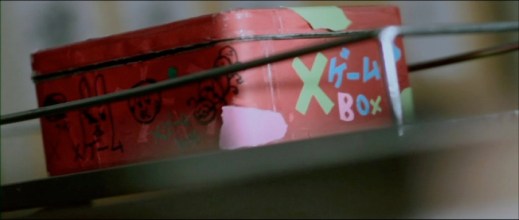
The title of the Japanese movie X-Game (originally X gêmu) may need some explanation. There’s a sort of tradition on comedic shows of the loser of a competition having to then accept a punishment. This is something mildly unpleasant that’s played up for laughs. It’s called the batsu game, and the character used to write it means ‘X’ (i.e., “incorrect”) as well as “penalty”. Fans of anime might have seen references to “penalty game” in shows like The Melancholy of Haruhi Suzumiya, where Suzumiya subjects her brigade members to penalty games for things like being late. It’s well-known enough that it wouldn’t be surprising if school-kids played punishment games just for the heck of it.
And we all know that children are cruel.
Warning Shadows (1923)
aka Schatten — Eine nächtliche Halluzination
Directed by Arthur Robison
Written by Arthur Robison and Rudolph Schneider
Starring Alexander Granach, Fritz Kortner, Ruth Weyher, and Gustav von Wangenheim
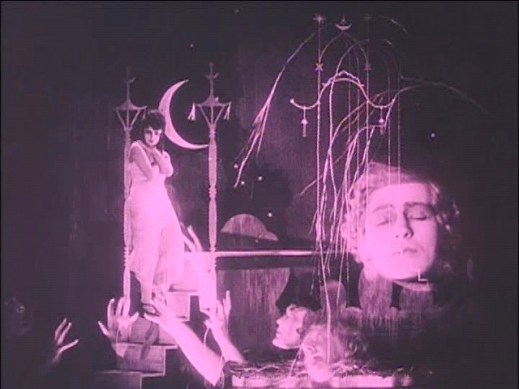
A lot of amazing stuff was going on in cinema during the 1920s. Feature films became predominant, telling longer and more complex stories to audiences willing to invest time in them. Movie palaces, seating a thousand and more patrons, became a part of the American cityscape. The advent of synchronized sound in 1927 remained the biggest game-changer until movies could be shot in color. In this climate of popularity and growth, some filmmakers were inclined to be more adventurous in their efforts. Such a director was Arthur Robinson, who decided to make his film Warning Shadows even more silent than the medium required.
Vampire Circus (1972)

Directed by Robert Young
Written by Judson Kinberg, George Baxt, and Wilbur Stark
Starring Adrienne Corri, Thorley Walters, Anthony Higgins, Laurence Payne, John Moulder-Brown, Lalla Ward, Robert Tayman, and David Prowse

With their 1958 release of Horror of Dracula Hammer Film Productions brought new life to vampire movies. By the 1970s the market had shifted, and the studio tried various ways to repackage the monsters to suit the modern audience. One result was the Karnstein Trilogy, which featured female nudity and lesbian sexuality. Dracula A.D. 1972 brought Christopher Lee’s Dracula to swinging London, which went about as usual but with different clothes and embarrassment all around. Then there’s the truly original Vampire Circus, which failed to make money but gained a following.
The Uninvited (1944)
Directed by Lewis Allen
Written by Dodie Smith and Frank Partos
Based on the novel Uneasy Freehold by Dorothy Macardle
Starring Ray Milland, Ruth Hussey, Donald Crisp, Cornelia Otis Skinner, Alan Napier, and Gail Russell

I miss the simple grandeur of title cards.
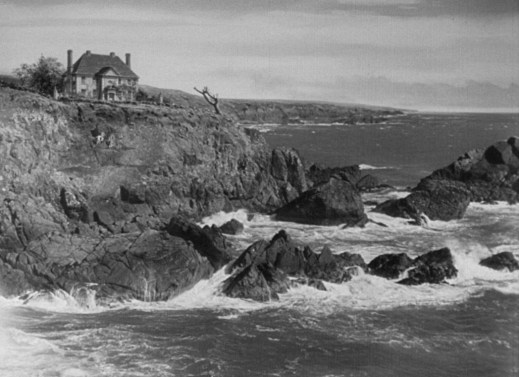
In 1961 Disney released 101 Dalmatians, creating yet another beloved classic. What does the animated tale of the world’s largest litter of puppies have to do with a gothic romantic comedy from 17 years earlier? The answer is simple on the surface, but the further I dug into it the more convinced I became that it would end in tears and Kevin Bacon. I forced myself to stop pursuing connections before I went looking for a power drill to open my mind. I will share just a bit of what I found, but be warned that you should probably avoid power tools for a while.
Torso (1973)
Directed by Sergio Martino
Written by Sergio Martino and Ernesto Gastaldi
Starring Suzy Kendall, Tina Aumont, Luc Merenda, and John Richardson

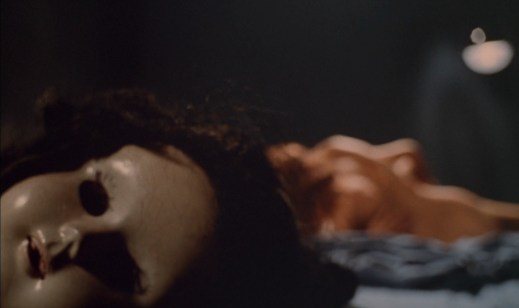
The far more unwieldy but accurate original title THE BODIES PRESENTED TRACES OF CARNAL VIOLENCE.
I’m a fan of giallo, the Italian mystery genre known for gloved killers, sometimes beautiful set pieces, and increasingly bizarre plots. So when something like Torso becomes available in a nice, restored reissue it’s not hard to guess where my paycheck’s going. After all, it’s infamous for having been censored in its English-language release. That must’ve been some great footage, right? Well, no. Not really. As it turns out, the best parts don’t contain very much gore or nudity.
Shock Treatment (1981)

Directed by Jim Sharman
Written by Richard O’Brien and Jim Sharman
Starring Cliff De Young, Jessica Harper, Richard O’Brien, Patricia Quinn, Charles Gray, Ruby Wax, Nell Campbell, and Barry Humphries
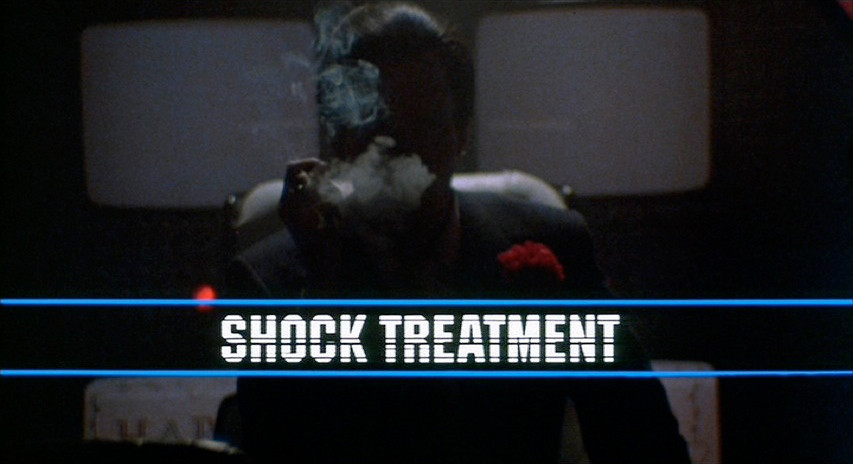
The mysterious Farley Flavors.
When The Rocky Horror Picture Show came out in 1975 it wasn’t exactly a hit. The continued midnight showings and growing fan base eventually got the notice of studio executives, which led to a predictable but terrible decision: cash in with a sequel! So it was that in 1981 the bizarre film Shock Treatment dropped like a bomb on baffled audiences.
Return From Witch Mountain (1978)
Directed by John Hough
Written by Malcolm Marmorstein
Characters by Alexander Key
Starring Bette Davis, Christopher Lee, Kim Richards, Ike Eisenmann, Jack Soo, and Anthony
James

I always get the prepositions wrong on these movies.
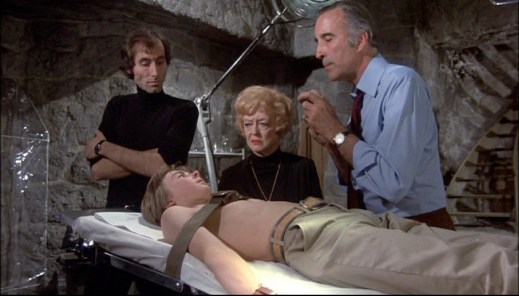
Tia and Tony are back in human civilization for an unsupervised visit, which turns out to be exactly as bad of an idea as it sounds. Having avoided the Trump-like clutches of Aristotle Bolt in Escape to Witch Mountain, you’d like to think that the space children had learned to keep their mental powers secret. Yet within moments of screen time after leaving Uncle Bene, Tony saves a falling man in as noticeable a way as he can manage and is kidnapped by Doctor Victor Gannon (Christopher Lee) and his patron Letha Wedge (Bette Davis). It’s up to Tia and the four kids of the Earthquake Gang to save Tony and Los Angeles.
Queen of Blood (1966)
Written and directed by Curtis Harrington
Based on footage from Mechte navstrechu by Mikhail Karzhukov and Otar Koberidze
Starring John Saxon, Basil Rathbone, Judi Meredith, Dennis Hopper, and Florence Marly

The title artwork is terrific. It looks like vintage science fiction covers.
Queen of Blood is a patchwork movie, built around footage from at least two Russian films: Mechte navstrechu and Nebo zovyot. Roger Corman snapped up the U.S. rights to the films and gutted them to use for his own features. Nebo zovyot was mostly turned into Battle Beyond the Sun, while Mechte navstrechu became the basis for this one. Given this origin, it’s remarkable that the film actually works.
Papaya: Love Goddess of the Cannibals (1978)

Directed by Joe D’Amato
Written by Roberto Gandus and Renzo Maietto
Starring Melissa Chimenti, Sirpa Lane, Maurice Poli, and Dakar
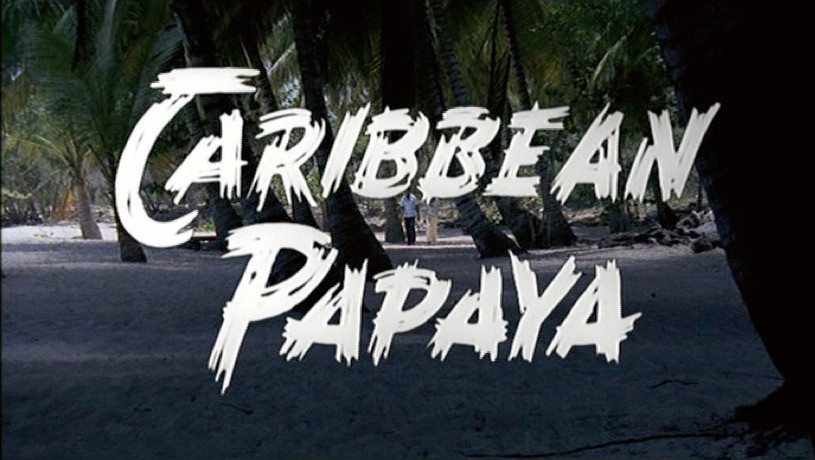
“Caribbean Papaya” is the best translation of the title, but “Die of Pleasure” would be my favorite version if not for the provocative “Papaya: Love Goddess of the Cannibals”.
To me, Joe D’Amato (the main pseudonym of Aristide Massaccesi) is the schlocky director of the barbarian adventure Ator, the Fighting Eagle and the cannibalism horror Anthropophagous. I dearly love these movies, while admitting that they’re fairly terrible. What I knew about but had never sampled was his extensive pornographic catalog. I have now filled that hole in my viewing.
 Web of the Big Damn Spider
