
Jessabelle (2014)
Directed by Kevin Greutert
Written by Robert Ben Garant
Starring Sarah Snook, Mark Webber, Joel Carter, David Andrews, and Ana de la Reguera

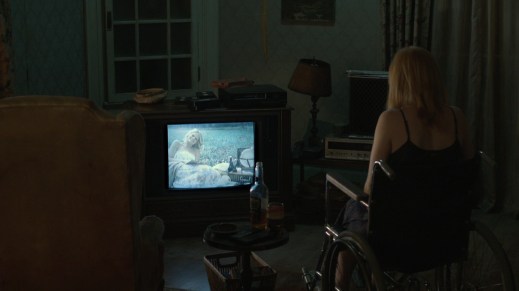
The title blurs a lot, so it’s difficult to capture in a single image.
Intruder (1989)
Directed by Scott Spiegel
Written by Scott Spiegel and Lawrence Bender
Starring Elizabeth Cox, Renée Estevez, Dan Hicks, David Byrnes, Sam Raimi, Eugene Robert Glazer, Ted Raimi, and Bruce Campbell
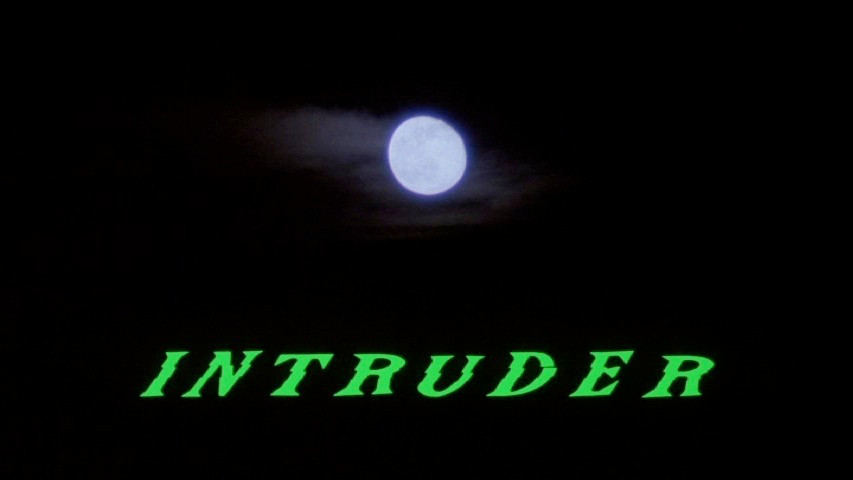
The entire movie takes place during one night.
If you’ve watched a lot of horror movies, or a few specific block-busters, you’ve seen Scott Spiegel. He shemped in Evil Dead and Evil Dead II and had cameos in several other Sam Raimi films, including Spider-Man and Spider-Man 2. What’s more interesting about him is his work behind the scenes. Co-writer of Evil Dead II; executive producer of Hostel; and writer, director, or producer of a dozen other genre films. The one we’re looking at today he directed and co-wrote, and it’s decent little slasher.
The House in Nightmare Park (1973)

Directed by Peter Sykes
Written by Clive Exton and Terry Nation
Starring Frankie Howerd, Ray Milland, Hugh Burden, Kenneth Griffith, and Rosalie Crutchley
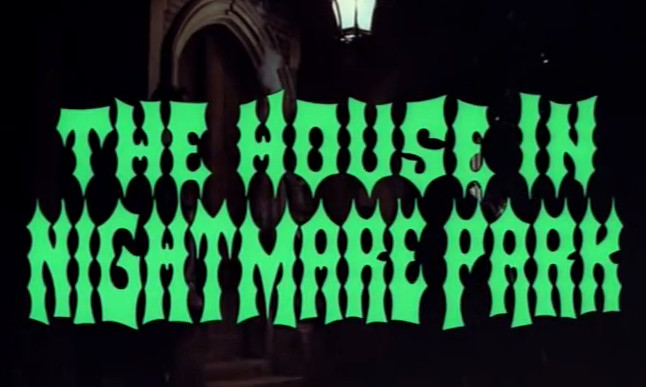
The Legend of the House on the Left at the End of the Lane in Nightmare Park.
There are times in which I believe that I don’t understand humor. Watching Jim Carrey and Adam Sandler rise to fame, I nearly became convinced that I didn’t. I do enjoy comedies, but I tend not to risk watching them unless I’ve heard good things from people I trust. A bad action or horror film can be fun in their own ways, but I find bad comedies excruciating. Being funny is the whole point, so when I can’t laugh with one I can’t enjoy it at all. To be honest, there are two exceptions to that general rule, and both are due to my affection for the soundtracks. The scores by The Kinks and Herb Alpert & the Tijuana Brass make the movies Percy and Casino Royale, respectively, worthwhile for me. For the “old, dark house” spoof The House in Nightmare Park I clung desperately to my adoration of Ray Milland, and that mostly saw me through.
The Grapes of Death (1978)

aka Les raisins de la mort
Directed by Jean Rollin
Written by Jean Rollin, Jean-Pierre Bouyxou, and Christian Meunier
Starring Marie-Georges Pascal, Félix Marten, Serge Marquand, and Mirella Rancelot

Administering the experimental pesticide.
The word “zombie” has been applied to so many things that it’s all but meaningless as a descriptor. Some are brought back from death, some are still alive. They could be under mental domination, operating on instinct, or possessed of full intellectual faculties. It may be spread as an infection, be the result of contamination, or achieved through hypnosis. Ravenous ghouls, mindless slaves, enraged masses: all zombies. About the only certainty in the term is that it implies a removal from normal society.
Frankenstein Must Be Destroyed (1969)

Directed by Terence Fisher
Written by Bert Batt and Anthony Nelson Keys
Starring Peter Cushing, Veronica Carlson, Freddie Jones, Simon Ward, Thorley Walters, Maxine Audley, and George Pravda
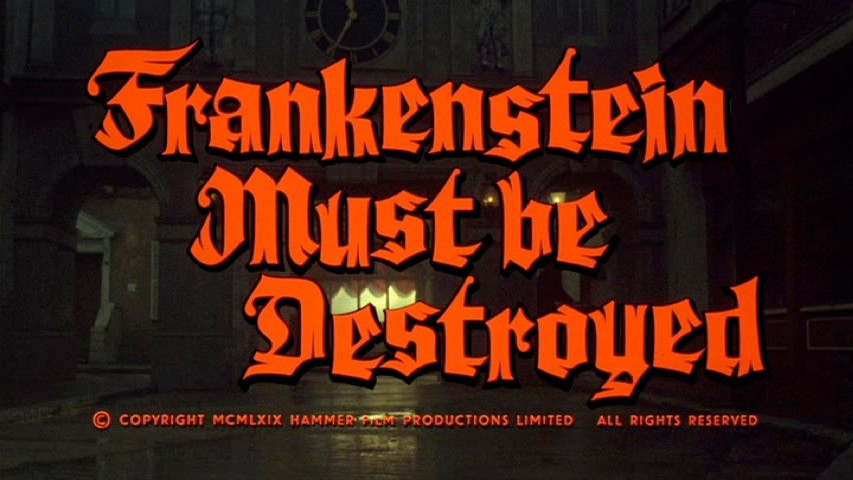
Incontrovertible statement.
Peter Cushing starred as Baron Frankenstein in six Hammer films, which is an awful lot of appearances as the same character. You might expect that as the series went on he’d start phoning in his performances, but if so then you don’t know Peter Cushing. Not only was he a consummate professional, but Frankenstein Must Be Destroyed — the fifth in the series — is 98% of his best turn as the relentless Baron.
Escape to Witch Mountain (1975)

Directed by John Hough
Written by Robert M. Young
Based on the book by Alexander Key
Starring Eddie Albert, Ray Milland, Donald Pleasence, Kim Richards, Ike Eisenmann, and Denver Pyle

The title animation makes the dogs seem like they’ll be important.
If you asked me who my favorite child actor at Disney was when I was growing up, I’d say Jodie Foster. Her hidden-treasure movie Candleshoe lodged in my brain and never left. But if for some reason you’d excluded Foster from the choices, I’d definitely give you a give you two answers: Kim Richards and Ike Eisenmann. They seemed to be everywhere, and most importantly they were Tia and Tony Malone: the Witch Mountain kids.
The Attic (1980)
Directed by George Edwards and Gary Graver
Written by Tony Crechales and George Edwards
Starring Carrie Snodgress, Ray Milland, Ruth Cox, Rosemary Murphy

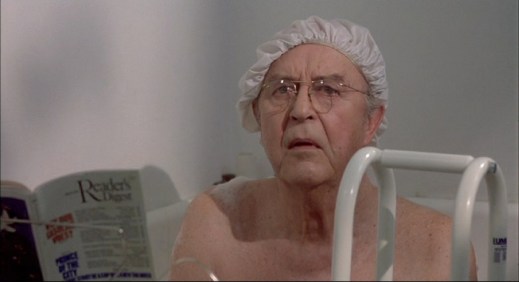
THE ATTIC: the terrifying story of a librarian who loves monkeys.
The 1973 film The Killing Way presented the gruesome murders of women that follow the release of a man convicted of rape. I’ve never seen it, but that’s okay. It’s irrelevant for this review except for its connection to The Attic. You see, the main characters of The Attic — Louise Elmore and her father Wendell — were side characters in The Killing Way, played by Luana Anders and Peter Brocco. Writers Tony Crechales and George Edwards decided to reuse them here, making it not quite a sequel but at the least a shared universe. Fortunately, this loose connection means that you can enjoy The Attic without having seen The Killing Way.
The Spider Labyrinth (1988)

Directed by Gianfranco Giagni
Written by Riccardo Aragno, Tonino Cervi, Cesare Frugoni, and Gianfranco Manfredi
Starring Roland Wybenga, Paolo Rinaldi, Margareta von Krauss, and Claudia Muzi

Spiders sold separately.
There are certain things I just know I have to watch. Giant spider movies, naturally. Italian horror is another favorite. I can’t say no to noir, especially the sort where investigation leads to doom. Anything with Ray Milland in it. So when I learned that The Spider Labyrinth was an Italian horror-noir about a spider cult, I nearly fainted with joy. Good thing Milland wasn’t in it!
Strait-Jacket (1964)
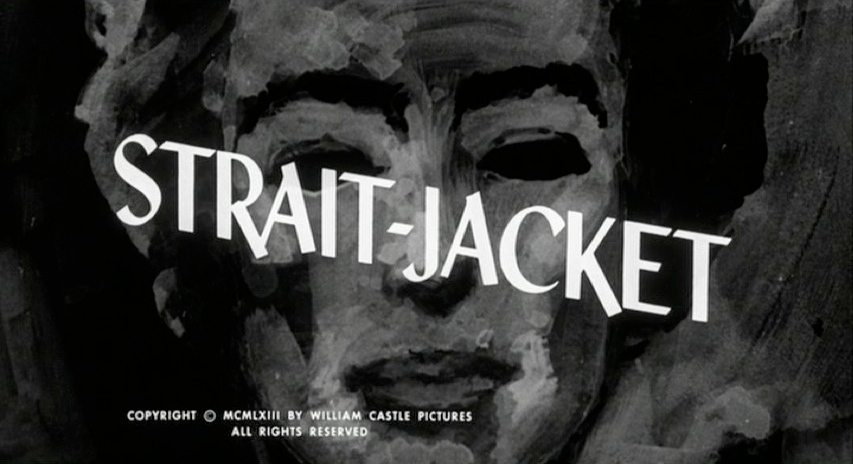
Making the title off-kilter is typical of the cheesy but effective approach of the film.
Written by Robert Bloch
Directed by William Castle
Starring Joan Crawford, Diane Baker, Leif Erickson, John Anthony Hayes, and George Kennedy
William Castle was a man who liked his gimmicks. He’d have theaters rigged with swooping skeletons or buzzers placed under seats. There were glowing coins and votes for how the film should end. But his greatest gimmick may have been casting Joan Crawford as an axe murderer who’s spent 20 years in an asylum. It’s not a glamorous role, but it’s a juicy one; and it’s far better than the usual parts for older actresses at the time (or even now, sadly). With a script by Robert Bloch (author of the novel Psycho was based on), Crawford may have even been optimistic about its reception. Sadly, it would not live up to the incredible What Ever Happened to Baby Jane?, which she’d made only a few years previously.
Zaat (1971)


Dr. Kurt Leopold: mad scientist, lover of fish
Directed by Don Barton and Arnold Stevens
Written by Don Barton, Arnold Stevens, Ron Kivett, and Lee O. Larew
Starring Marshall Grauer, Wade Popwell, and Gerald Cruse
When I sat down to watch Zaat, I wondered why I’d done this to myself. Entering October I’d only written a dozen of the reviews I’d need for Hubrisween, and even though these are generally shorter than my normal reviews that left 14 to write in under a month. Then, to top it off I’d be ending with a movie that had been painful even with the wise cracks from MST3K over the top of it!
Maybe it’s the fatigue talking, or perhaps a side-effect of having watched Up From the Depths the day before, but I didn’t find the experience unbearable. I’m not saying it’s a good movie, but it has enough genuine effort and quirky charm in it to be a nearly pleasant distraction. The restoration for the new bluray release makes the colors vivid, which greatly improves the experience of watching it. With the dingy veneer removed, it’s somewhat less cheap and depressing.

The footage of Leopold swigging Bromo is much less dingy.
The faults are glaring in this one. For starters, the movie begins with a bizarrely pompous speech on the virtues of quite a lot of fish. But the narration doesn’t stop with the fish footage. As we follow the ichthyophilic Dr. Leopold into his shabby beachfront lab, he continues to narrate his thoughts — most of which center on standard mad science rhetoric about showing them all. I may have blinked and missed it, but I don’t think that he ever speaks aloud. Maybe in a flashback to his eviction from mainstream science.
The acting is largely passible to competent, especially among the characters who we see the most of. There are a few truly awful actors, but fortunately they only have a line or two. What’s truly bizarre is that two of the main characters are members of the Inter-Nations Phenomena Investigation Team, or INPIT, an organization that apparently sends romantically involved pairs to do basic police work when bumpkin sheriffs are failing to match wits with mad scientists bent on human annihilation. They have action suits.
Much of Zaat is concerned with the sheriff, the INPIT agents, and a marine biologist running around trying to figure out why walking catfish are attacking people. We never see evidence of these attacks, but there is a shot of catfish crowding up next to a road. For all we know, they spend the rest of the movie waiting for traffic to let up so they can cross. It’s a little strange then that it takes our heroes over half the movie to notice the tall, bipedal fish that’s killing people. When they finally check out Leopold’s lab and see the murders laid out as part of his Spinning Wheel of Revenge plan they’ve gotta feel pretty dumb.

Rex and Sheriff Lou marvel at the Wheel O’ Revenge.
As stupid and often dull as this movie is, I kind of love it for its commitment to mad science. Years previously, Dr. Leopold saw the potential of mixing the compounds Za and At to cause radical mutation, but the people in charge of the government research station wouldn’t allow him to pursue his dream of turning people into fish. So he quits and waits for his chance, buying the facility when the government finally abandons it, and continuing his work with stolen tanks of leftover ZaAt. He works revenge into his scheme to raise an army of fish, writes it all down on a giant circle, and keeps his time-table down to the month! This, despite mechanical failure botching his initial attempt to create a mate and receiving injuries once INPIT figures out what he’s up to.
Leopold’s the very model of a successful mad scientist! I think there are two major things working in his favor. The first is that he turns himself into an unstoppable monster before making his presence known. Heck, the sheriff knew about Leopold’s purchase of the research facility but never mentioned it because he hadn’t seen the doctor in years. The other factor in his success, I believe, is that he works alone, with no assistant to rebel or accidentally break things. So whatever else, the film shows how a classic scientific villain can achieve lofty, world-destroying goals.
That’s all I have to say about Zaat.
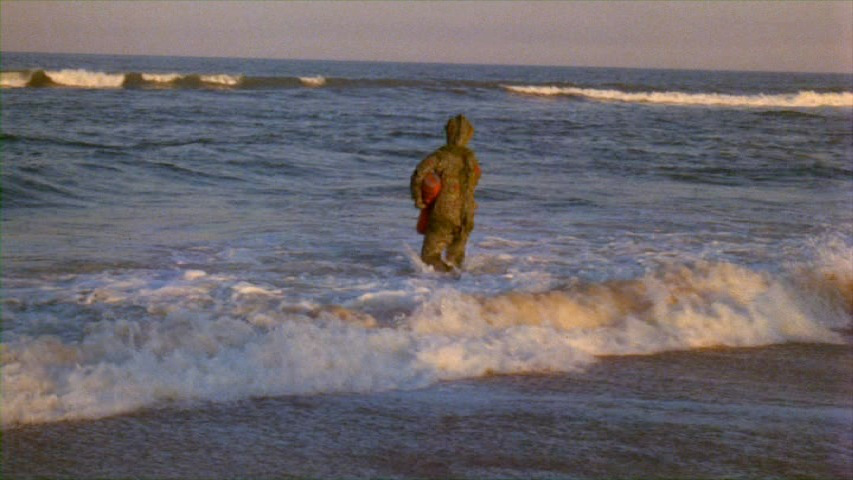
Hubrisween departs, like the majestic man-fish returning to the sea from which it wasn’t born.
 Web of the Big Damn Spider
