
Trouble Every Day (2001)

Directed by Claire Denis
Written by Claire Denis and Jean-Pol Fargeau
Starring Vincent Gallo, Tricia Vessey, Béatrice Dalle, Alex Descas, and Florence Loiret Caille

I’m generally willing to meet a film at least half way. A slowly paced story with lengthy silences isn’t a deal-breaker for me, and the horror of the human condition is my kind of thing. English, French, Japanese, Hindi — the language doesn’t matter as long as I can follow along with subtitles. But at the end of the journey, I need to have felt something more than tedium. Trouble Every Day only added irritation for me.
Da Sweet Blood of Jesus (2014)

Directed by Spike Lee
Written by Spike Lee and Bill Gunn
Starring Stephen Tyrone Williams, Zaarah Abrahams, Rami Malek, Elvis Nolasco, Felicia Pearson, Katherine Borowitz, Joie Lee, and Naté Bova

For a long time, it wasn’t easy to see Ganja & Hess, especially not as originally released. The distributors pulled it from theaters, recut it (removing around a half an hour from its run time), and re-released it as Blood Couple. A complete print was donated to MoMA and has had a few releases, most recently though Kino Lorber. I mention this because because by doing a remake of the film as Da Sweet Blood of Jesus, Spike Lee essentially brought Bill Gunn’s version to a wider audience.
Ravenous (1999)

Directed by Antonia Bird
Written by Ted Griffin
Starring Guy Pearce, Robert Carlyle, Jeffrey Jones, Stephen Spinella, Jeremy Davies, Neal McDonough, David Arquette, and Joseph Runningfox
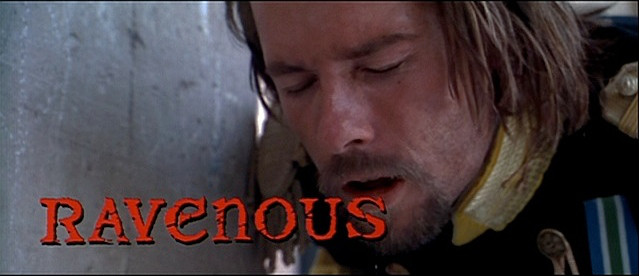
Cannibals are one of the lesser horror monsters. Since 1977 they’ve primarily been mutants, hillbillies, or mutant hillbillies, but throughout the history of film they’ve been refined gourmets, restauranteurs, ghouls, zombies, and even middle-class Americans. One seldom-used take is based on the Algonquian legend of the wendigo, a powerful being may once have been human. An interpretation of this creature is the basis for Antonia Bird’s remarkable horror movie Ravenous.
Qualcosa striscia nel buio (1971)

aka, Something Creeping In the Dark
Written and Directed by Mario Colucci
Starring Farley Granger, Lucia Bosé, Giacomo Rossi Stuart, Stelvio Rosi, Mia Genberg, Gianni Medici, and Dino Fazio

I have a high tolerance for Italian horror cinema. Incoherent plots and terrible dubbing are par for the course, but stellar locations, inventive set pieces, and the occasional flair for lighting and cinematography are the rewards I often get for overlooking those failings. Yet every now and then I trip over a dud like Qualcosa striscia nel buio that leaves me face down in the poop juice, questioning my commitment to Sparkle Motion.
Pathogen (2006)

Written and directed by Emily Hagins
Starring Rose Kent-McGlew, Alec Herskowitz, Tiger Darrow, Tony Vespe, and Rebecca Elliot

When she was 12 years old Emily Hagins started filming Pathogen with the help and support of her parents. Due to school commitments and inexperience it took over a year to get the film completed and ready to show. (It played at the Alamo Drafthouse, which the Hagins frequented.) While I’m easily swayed by creativity and effort, I’m not always kind in my reviews. This movie has me in a sort of critical form of double vision because I don’t want to crap on the creative efforts of a tween, but it’s really not very good.
Organ (1996)

Written and Directed by Kei Fujiwara
Starring Kei Fujiwara, Kimihiko Hasegawa, Yosiaki Maekawa, and Kenji Nasa

I like being surprised by movies, and sometimes the most effective surprises come after completely breaking down my faith in the filmmakers. Videodrome, Brand Upon the Brain, Holy Mountain — these are a few of the movies that have challenged me to alter how I approach a narrative. It’s thanks to those that I was able to even follow Organ, let alone enjoy it.
Near Dark (1987)
Directed by Kathryn Bigelow
Written by Kathryn Bigelow and Eric Red
Starring Adrian Pasdar, Jenny Wright, Tim Thomerson, Lance Henriksen, Bill Paxton, and Jenette Goldstein

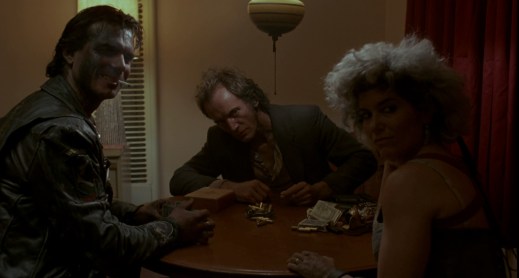
Vampires are predatory. We all know that. Yet ever since they became lead characters, every effort has been made to reduce or excuse their feeding habits. They only take a little blood, or that of animals, or eat bad people, or use a synthetic material — anything to get around the basic fact about vampires; they are the bad guys. So whenever I get too sick of all this glamorization, I like to watch a film that remembers they’re monsters. Something like Near Dark.
Messiah of Evil (1973)

Directed by Willard Huyck and Gloria Katz
Starring Michael Greer, Marianna Hill, Joy Bang, Anitra Ford, Royal Dano, Elisha Cook Jr., and Walter Hill

There are Lovecraft adaptations, and then there are movies that feel Lovecraftian. They take place in small coastal towns, where fishing is the main industry. People are secretive there, and they scurry about their business in the shadows. They are up to something in the darkness, but you’re reluctant to find out exactly what. Such a film is Messiah of Evil, and it’s one of the most unsettling movies I’ve ever seen.
The Love Witch (2016)
Written and Directed by Anna Biller
Starring Samantha Robinson, Jeffrey Vincent Parise, Laura Waddell, Gian Keys, Jared Sanford, Robert Seeley, and Jennifer Ingrum

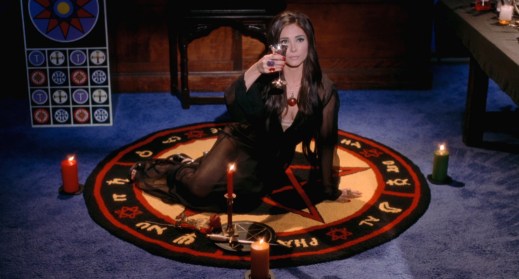
The double standard for gendered behavior in our society establishes rules that few can follow. It’s especially hard on women, who are still held to the artificial 1950s model of being subservient homemakers. In return men are expected to have no emotional life. The whole mess is a recipe for disaster, and that’s what we get in the comic love tragedy The Love Witch.
Kiss of the Damned (2012)
Written and Directed by Xan Cassavetes
Starring Joséphine de La Baume, Roxane Mesquida, Milo Ventimiglia, Caitlin Keats, Anna Mouglalis, and Michael Rapaport

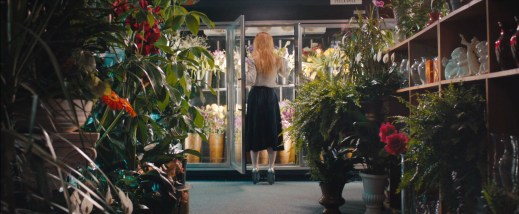
Vampire movies featuring women used to be about sex, implied or explicit. The story of Countess Bathory has been filmed many times with varying degrees of predatory lesbian action. Naked, young vampire women occupy a significant portion of the filmographies of sexploitation-horror directors like Jean Rollin. But we’re starting to see more films that treat female vampires as actual characters, even as the Underworld series reduces Kate Beckinsale to a fetishized killer. One of these is Xan Cassavetes’ Kiss of the Damned, which explores the struggle between intellectual and physical desire.
 Web of the Big Damn Spider
